
How Oklahoma Jail Mugshots Work
Oklahoma booking photos are local law-enforcement records first. The jail, sheriff, jail trust, city police department, or detention center that books the person controls the booking record. County research across Oklahoma shows that roster access is not uniform. Some counties publish a roster, some use vendor systems, some rely on sheriff or jail contact channels, and some local records require an Oklahoma Open Records Act request. That local structure is why a statewide search must route to the right county instead of promising one all-Oklahoma mugshot list.
A booking photo is also only one field in a larger custody record. It can appear near name, booking date, charges, hold reason, bond, facility, release status, or case clues. It is not proof of conviction. For charge outcomes, use court records after the arrest. For a sentenced state prisoner, use ODOC. For federal custody, use BOP. For immigration detention, use ICE. For release or transfer notification, use Oklahoma VINE or VINELink.
Find Oklahoma Booking Photos
The best search path starts with the arrest location. If the arrest was recent, use the county where the booking happened. If the booking county is unclear, look for clues in court records, VINELink, news releases, or agency notices. The County Directory routes to county-level pages, while the Facility Directory distinguishes county jails, city lockups, tribal or regional detention, ODOC prisons, federal facilities, and ICE or contract detention.
- Identify the county, city, or facility that booked the person.
- Open that county's jail roster, booking report, or detention-center page from the directory.
- Search by name, booking number, or other available local field.
- Open the roster profile and look for a booking photo or image field.
- If no photo is online, send a public-records request to the agency that created the booking record.
The ODOC direct offender-search path screenshot shows the state correctional search channel that applies after a person moves into ODOC custody or supervision.
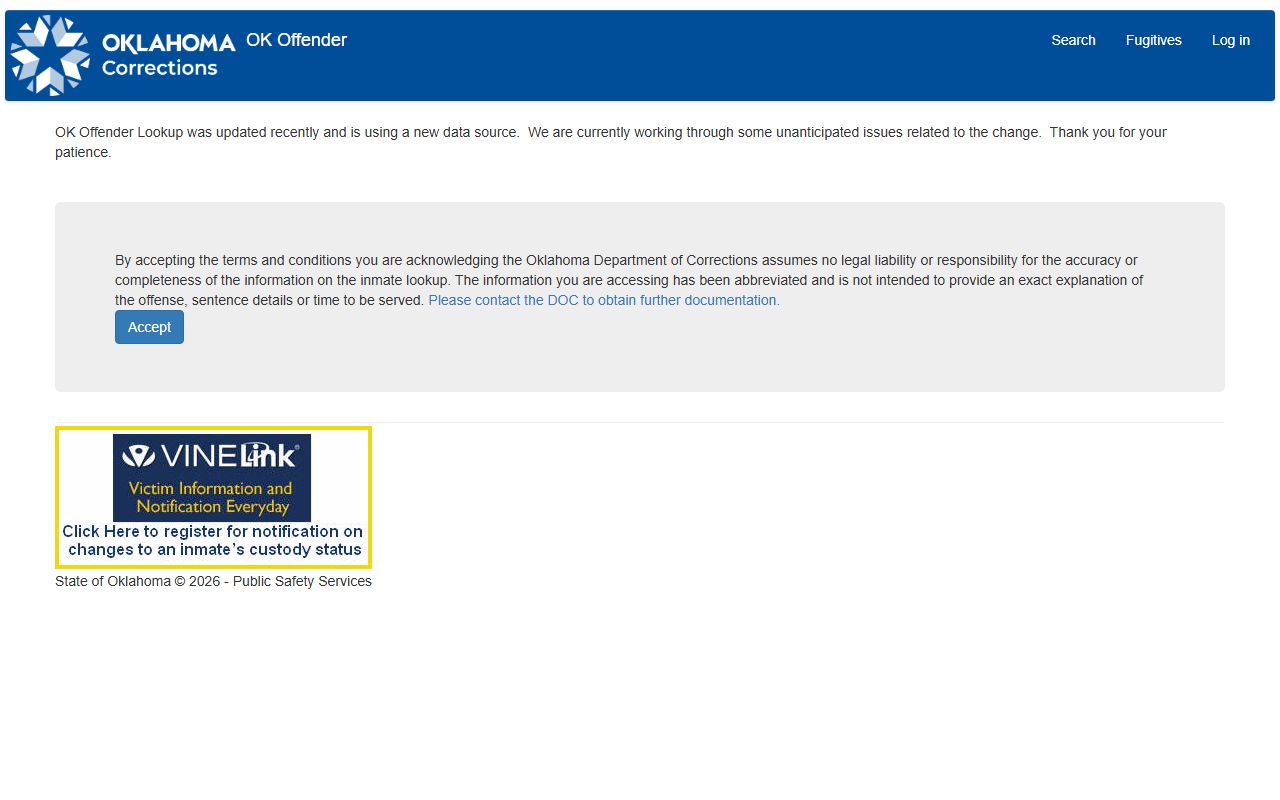
That source helps separate county booking-photo searches from state-prison custody searches, which are often confused after sentencing or transfer.
Oklahoma Booking Photo Records
A booking-photo profile should be read as a local custody snapshot. The exact fields depend on the county system. A large jail-trust roster, a sheriff-hosted roster, a municipal booking report, and a vendor search screen may all format the same underlying kind of record differently. When a roster omits an image, the omission does not prove that no booking photo exists. It may mean the county does not publish images online, the record has dropped from the public roster, the case is restricted, or the request must go through the agency's records channel.
| Field | What It Shows |
|---|---|
| Booking photo | The image taken during local intake when the agency publishes it or releases it through records channels. |
| Name | The identity field used to match the booking record, subject to spelling, aliases, and suffixes. |
| Booking date | The local intake date, which may differ from later court-filed dates or ODOC admission dates. |
| Charges or hold reason | The arrest, warrant, detainer, or intake reason shown by the jail, not necessarily the final court charge. |
| Bond or release status | The roster's current release clue when published, which may change after court orders or agency holds. |
| Facility | The jail, city lockup, detention center, or holding site tied to the booking record. |
Are Oklahoma Mugshots Public?
The statewide public-records starting point is the Oklahoma Open Records Act, Title 51, Sections 24A.1 through 24A.30. The research identifies Section 24A.8 as the key law-enforcement-records section for jail and arrest material. County research repeatedly uses the Open Records Act as the fallback when a sheriff, jail, or detention center does not publish a roster, booking log, or request form. That does not mean every image must be posted online. It means the request starts with the agency that made or holds the booking record.
Key Statutes:
Oklahoma Open Records Act, 51 O.S. Sections 24A.1 through 24A.30 - the statewide public-records framework for Oklahoma government records.
51 O.S. Section 24A.8 - the researched starting point for public inspection of law-enforcement records.
Oklahoma research also identifies limits. Some agencies may withhold or redact records under statutory exceptions, open investigation limits, juvenile confidentiality, medical or mental-health confidentiality, victim protections, privacy rules, or security rules. A booking photo request should be precise, but it should not demand records the agency is legally barred from releasing.
How Long Mugshots Stay Online
Online duration varies by county because Oklahoma has no single statewide roster database. A photo may stay visible only while the person appears on the active jail roster. Another county may show recent bookings, daily booking reports, or vendor profile pages. A released person may drop from one roster while the court case remains searchable through ODCR or OSCN. A sentenced person may leave the county roster and later appear in ODOC lookup, especially during the 6 to 9 month post-sentencing transport window described by ODOC offender information.
What is and is not public: A roster image may be public through a local jail record, but juvenile, sealed, medical, victim-related, security, and active-investigation limits can restrict access.
The ODCR participating-court search screenshot shows where court records may remain searchable after a booking-photo entry drops from a county jail roster.
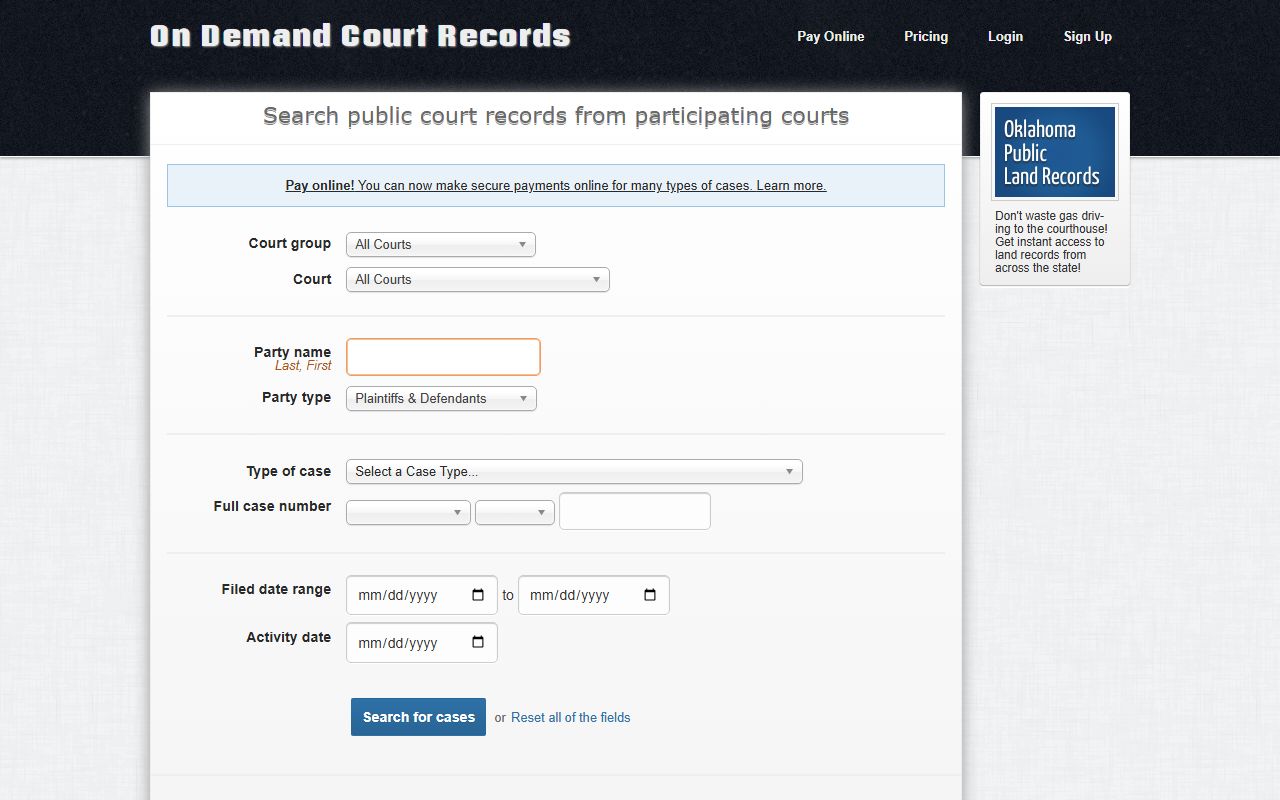
Use the court record for filed charges and disposition, not as a replacement for the booking photo or current custody record.
Request Oklahoma Booking Photos
A public-records request for an Oklahoma booking photo should go to the agency that created the booking. For a county jail, that may be the sheriff, jail trust, county detention center, or a records unit named in the local county research. For a city lockup, it may be the police department. For a tribal or regional detention row, use the operator identified in the facility directory. Do not send a county booking-photo request to ODOC unless ODOC holds the record.
The request should name the person, the booking date or approximate date, the booking number if known, the facility, and the record sought. Avoid asking for medical status, protected juvenile information, victim information, or release dates that are restricted. ODOC release dates are confidential unless the requester has a legitimate need. ODOC medical records have a separate request channel. Federal and immigration records use federal processes, not the Oklahoma Open Records Act.
The ODOC offender-information page screenshot shows statewide information on release-date confidentiality, transfer timing, community corrections, mail, and security levels.
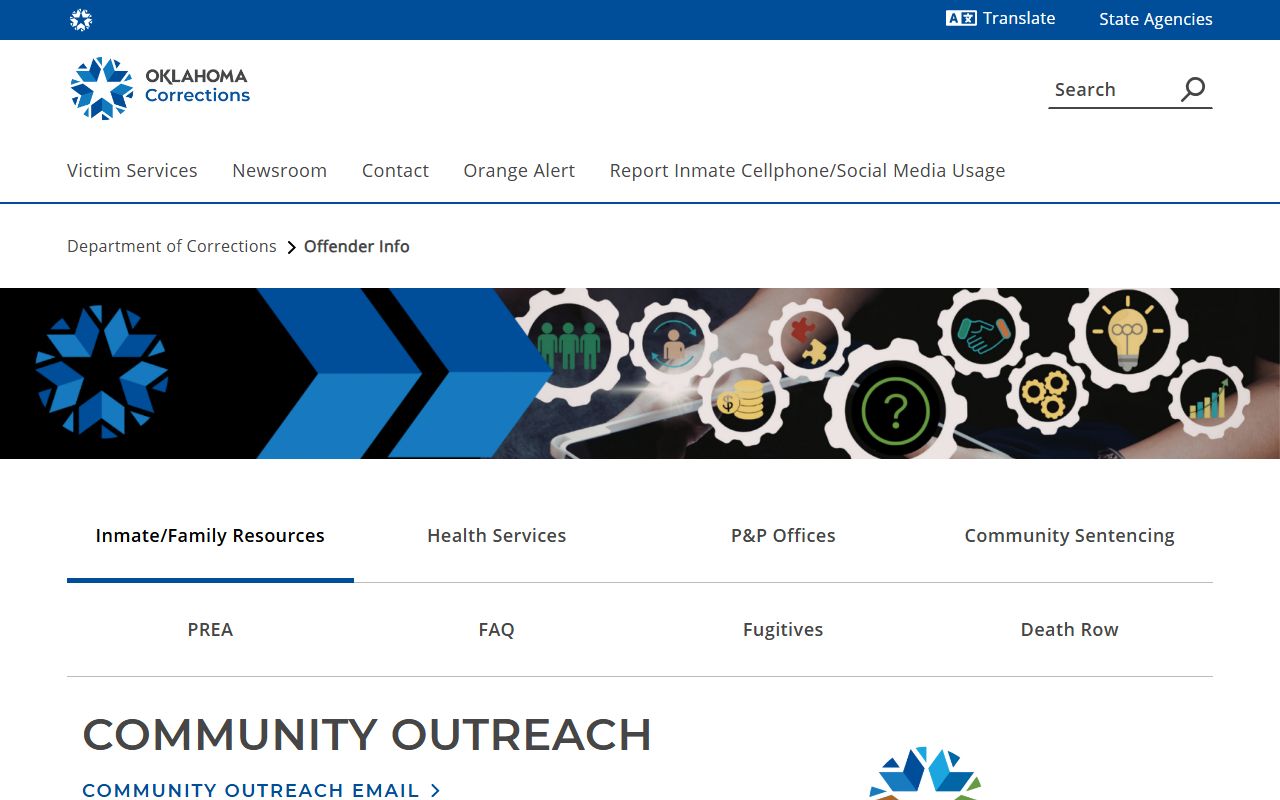
Those limits matter when a booking-photo search becomes a request for state-prison status, release timing, or transfer information.
Mugshot Removal and Sealed Records
Oklahoma mugshot removal should be treated as a records-correction or court-record question, not as a commercial cleanup task. The research does not support linking to or endorsing pay-to-remove mugshot sites. When a charge is dismissed, sealed, expunged, or otherwise restricted, the court record and the agency record may need separate review. A court order may affect public access, but agencies and portals can differ in timing, scope, and process.
Start with the case status. Search Oklahoma court records after a jail arrest to see whether the charge was filed, dismissed, amended, reduced, or disposed. Then contact the agency that controls the public roster or booking record. If the issue involves ODOC, use ODOC records channels. If the issue involves a court file, use the clerk or court process. If the issue involves a county booking photo, use the county agency that created the record.
State and Federal Photo Limits
County jail mugshots are different from ODOC, BOP, and ICE records. Federal agencies such as BOP and U.S. Marshals generally do not publish booking photos through the inmate locator. BOP's locator is a federal custody lookup for people incarcerated from 1982 to the present, searchable by number or name. ICE ODLS is a current immigration detention locator that requires JavaScript and can be searched by name, country of birth, and birth date, or by an A-number.
ODOC lookup is for state correctional custody and supervision context, not for a new county arrest. ODOC's own lookup disclaimer says the information is abbreviated and not intended to provide an exact explanation of the offense, sentence details, or time to be served. That warning applies when users try to treat a state-prison result as a full booking file or mugshot record.
The Federal Bureau of Prisons inmate locator screenshot shows the federal custody search route that should be used instead of a county mugshot search for federal inmates.
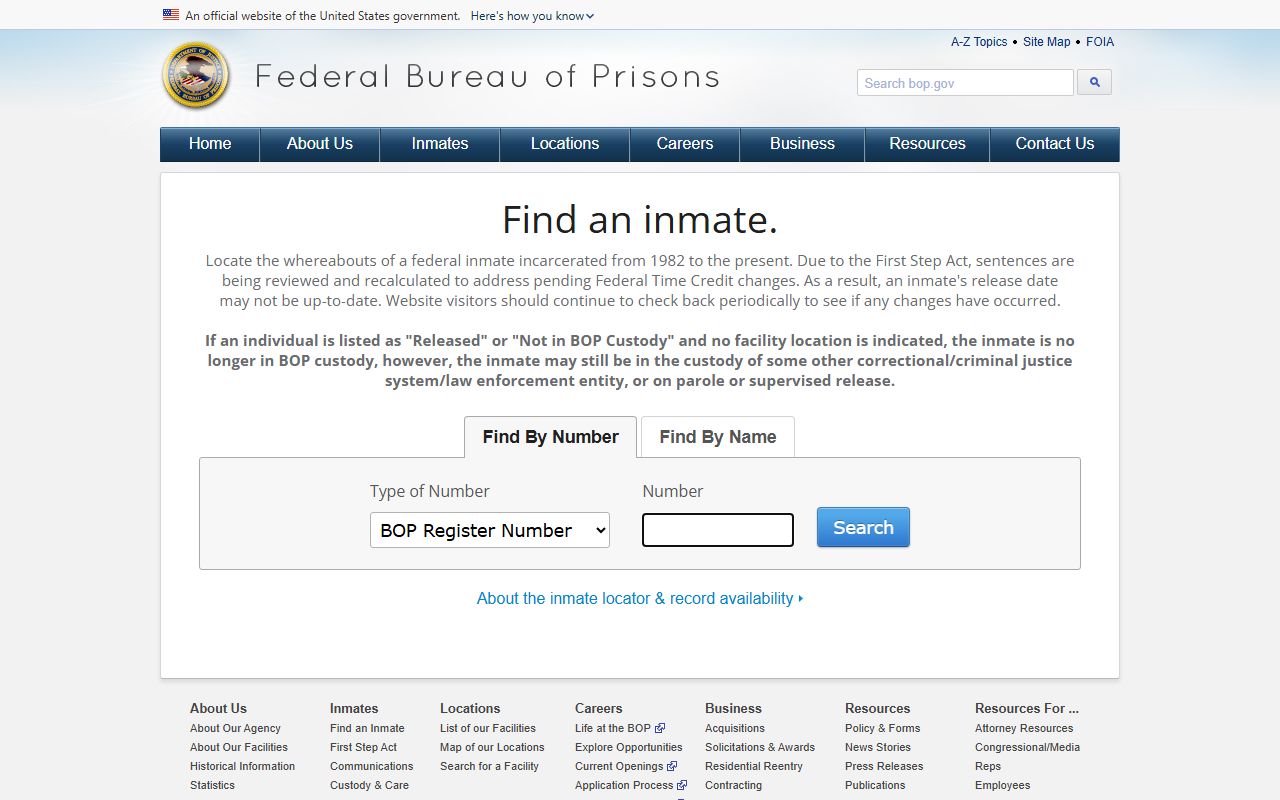
That federal locator can answer custody location, but it should not be read as a public federal mugshot gallery.
Mugshots and Custody Alerts
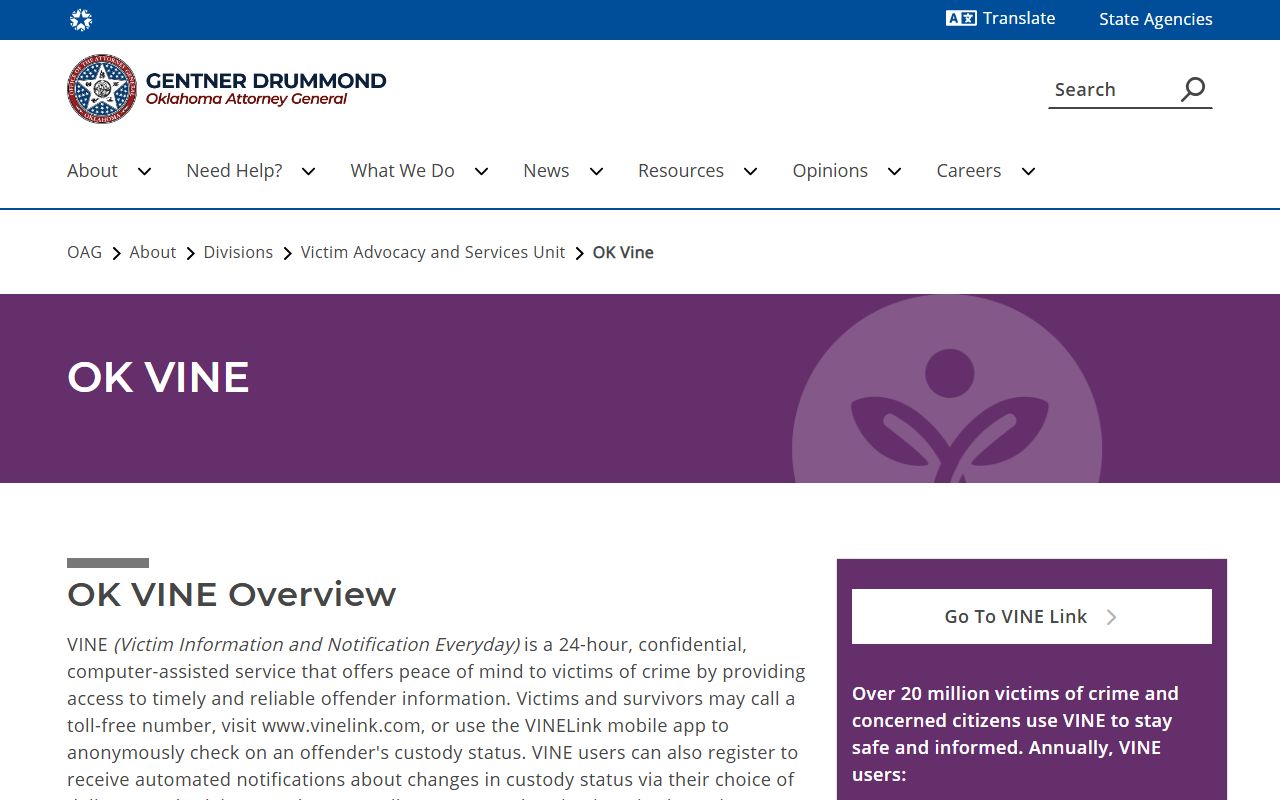
Oklahoma VINE can help when a booking photo search is really a custody-status concern. The Oklahoma Attorney General describes VINE as Victim Information and Notification Everyday, a 24-hour confidential computer-assisted service for offender custody status. Users may call, visit VINELink, or use the mobile app, and can register for automated notifications by app alert, phone, email, text, or TTY. The registration phone is 1-877-654-8463, and OK VINE training or information phone is 405-521-3921.
The Oklahoma Attorney General OK VINE page screenshot shows the statewide notification source used for custody alerts rather than booking-photo publication.
Use VINELink for release and transfer alerts, then use the county roster, ODOC, BOP, ICE, or court records for the underlying public record.